From “Treatment” to “Preventive Health” BDMS Wellness Clinic and the Global Wellness Institute Spotlight Thailand’s Wellness Economy on the Global Stage
Today, Thailand’s wellness economy reflects more than business growth; it represents a structural transformation—from a system focused on “treatment after illness” to one that prioritizes “prevention before illness”.
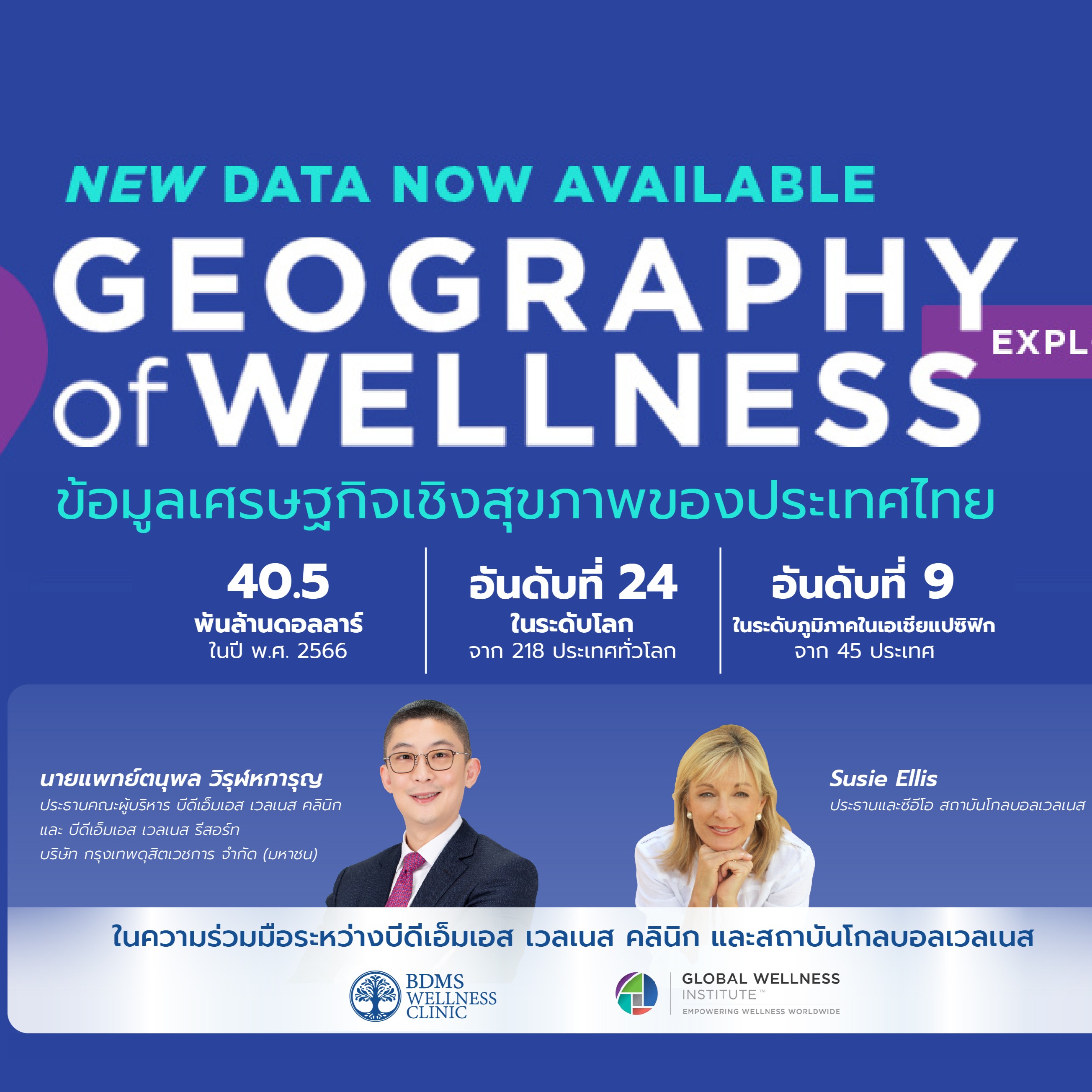
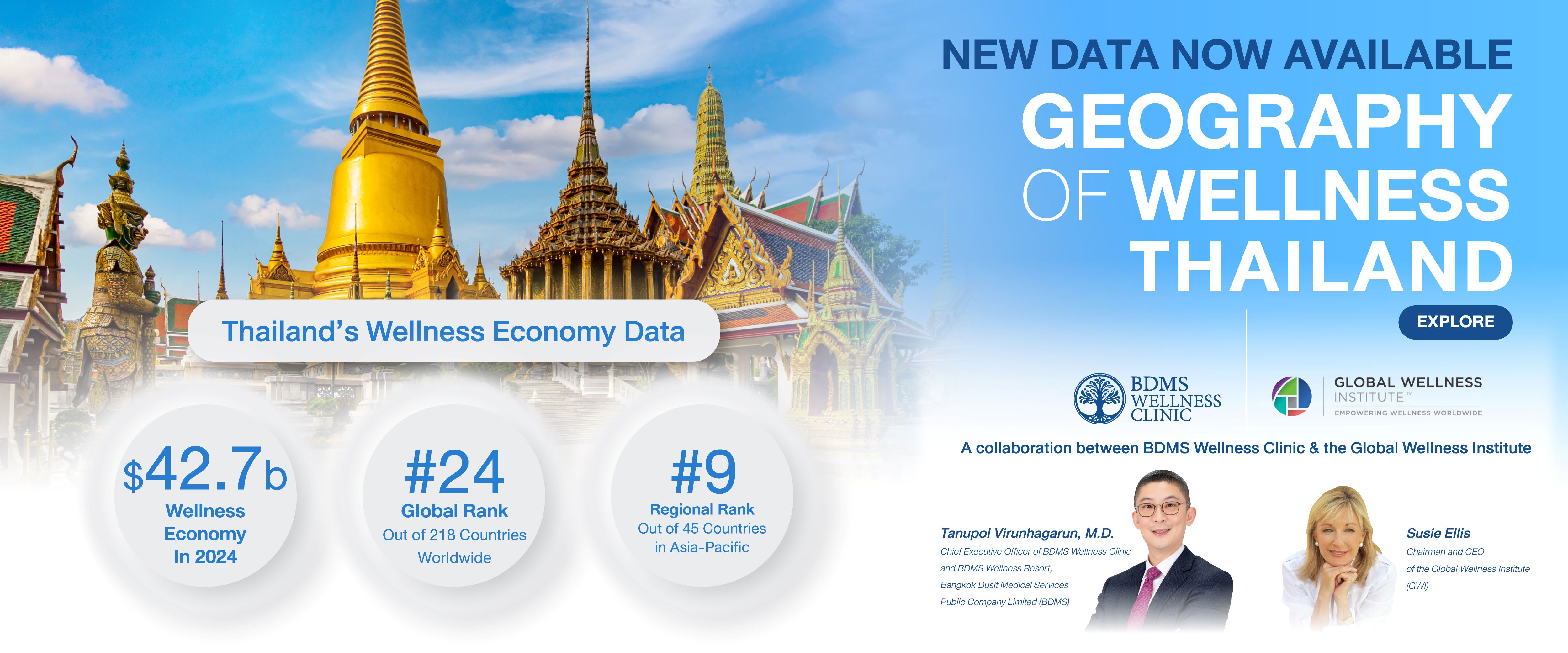
According to the latest report by the Global Wellness Institute (GWI), Thailand’s wellness economy reached $42.7 billion in 2024, up from $38.8 billion in 2023—representing a 10.1% growth rate and ranking 7th globally. These figures underscore that “health” is no longer merely a cost to the nation, but a high-value economic asset with strong long-term growth potential.
At the global level, the wellness economy reached $6.8 trillion in 2024, growing at an average annual rate of 7.9% between 2023 and 2024—outpacing global GDP growth. GWI projects that it will continue to expand at a compound annual growth rate (CAGR) of 7.6%, reaching $9.8 trillion by 2029. This trend highlights how preventive health is emerging as a dominant global paradigm.
For Thailand, the country currently ranks 9th out of 45 countries in the Asia-Pacific region and 24th globally out of 218 countries, reflecting its strong competitiveness on the international stage. The wellness tourism sector, in particular, stands out as a key economic driver, with a market value of $14.05 billion in 2024 and a growth rate of 36.4%, ranking 3rd globally. This momentum reinforces Thailand’s position as a leading global destination for integrated health and wellness tourism.
Susie Ellis, Chair and CEO of the Global Wellness Institute, stated that “Thailand’s continued rise as a global wellness leader—reaching a $42.7 billion market and achieving double-digit recent growth—reflects both the country’s deep cultural commitment to wellbeing and its forward-thinking investments in innovation and preventive health. The remarkable expansion in wellness tourism, spas, and wellness real estate highlights how Thailand is meeting the evolving expectations of today’s wellness consumers while shaping the future of the global wellness economy. We are deeply grateful to BDMS Wellness Clinic for their sustained partnership and vision. Their ongoing support makes it possible to deliver credible data and insights that empower industry leaders, policymakers, and communities to build a stronger, more resilient wellness ecosystem in Thailand and beyond.”
Dr. Tanupol Virunhagarun, also known as “Dr. Amp”, Chief Executive Officer of BDMS Wellness Clinic and BDMS Wellness Resort, Bangkok Dusit Medical Services Public Company Limited (BDMS) spoke about the collaboration with GWI, stating that “Our ongoing partnership with GWI, now in its fourth consecutive year, reflects our strong commitment to advancing preventive healthcare in a concrete way. This effort extends beyond the medical sector to encompass economic, lifestyle, and environmental dimensions that influence long-term well-being. The wellness economy report from GWI provides valuable insights into the future direction of the world, as it transitions from a system focused on disease treatment to one that emphasizes health promotion and prevention. For Thailand, the growth of the wellness economy highlights the country’s strong potential to develop an integrated ‘wellness ecosystem’ that connects multiple sectors, including preventive medicine, wellness tourism, food and nutrition, physical activity, and environments that support overall well-being. If these elements can be systematically connected, Thailand will not only remain a leading destination for wellness tourism, but also unlock the opportunity to become a regional wellness hub—playing a significant role in shaping the future of the global wellness economy, both in enhancing quality of life and supporting long-term economic sustainability.”
Between 2023 and 2024, beyond wellness tourism, other including wellness real estate, spas, healthy eating, nutrition and weight loss, physical activity, and workplace wellness—have all experienced positive growth. This trend signals that modern consumers are no longer seeking health solutions in isolation, but are instead looking for a holistic “wellness ecosystem” that encompasses food, housing, physical activity, and workplace environments.
These figures highlight not only economic success, but also a strategic opportunity for Thailand. By developing an integrated health ecosystem that seamlessly connects healthcare, tourism, and service industries, Thailand can evolve beyond a wellness destination into a global leader with a strong, holistic, and sustainable wellness ecosystem.
The wellness economy is not a passing trend; it represents a foundational shift for Thailand’s future, where economic progress, the quality of life of its people, and global competitiveness advance together